Subcontractor Coordination on a Remodel: What Your GC Actually Manages
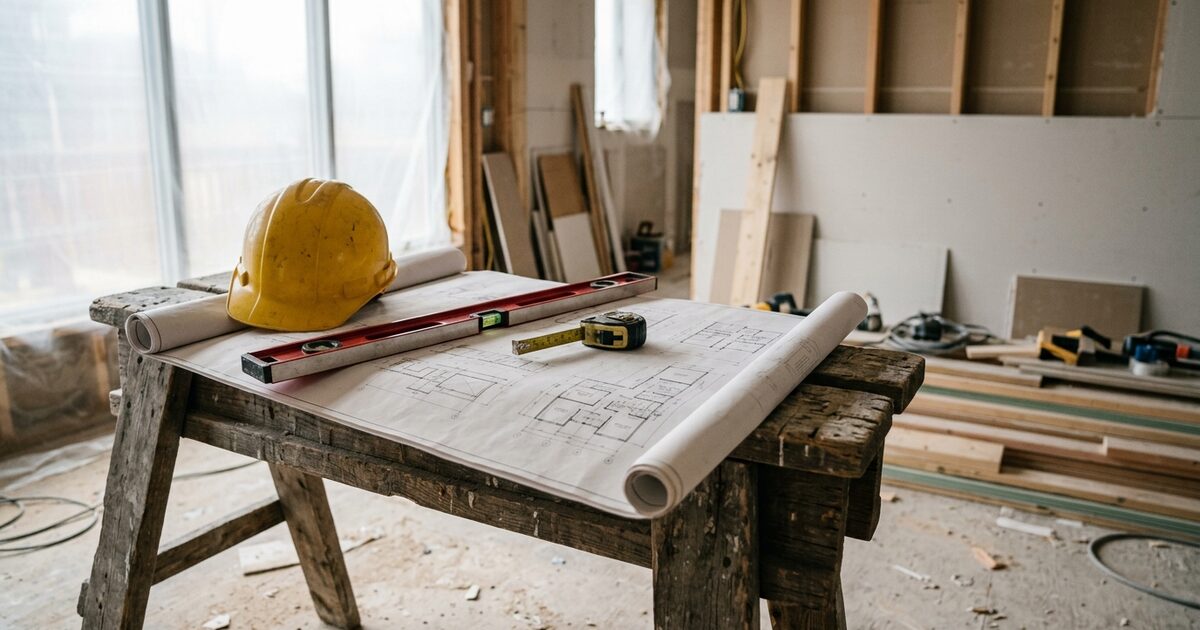
When you hire a general contractor, you are not just hiring a builder — you are hiring a coordinator who keeps a chain of specialized tradespeople moving in the right sequence, at the right time, without gaps or collisions. Here is what that coordination actually looks like on a residential remodel.
Why sequence matters more than speed
The single biggest source of cost overruns on remodels is not materials or labor rates — it is sequencing errors. Work done out of order gets redone. A plumber who rough-ins before the framing inspection passes has to open walls that the drywaller already closed. An electrician who runs conduit before the HVAC contractor positions the equipment ends up in a conflict that both trades blame the GC for not preventing.
A general contractor's core job is to build and maintain the sequence — what trades are on site, in what order, and what each one needs from the prior trade before their work can begin. On a typical bathroom remodel, that sequence might look like: demo, rough framing, rough plumbing, rough electrical, HVAC, inspections, insulation, drywall, tile, finish plumbing, finish electrical, fixture installation, final inspection. Each step has a defined output that unlocks the next one.
When the sequence breaks, the GC manages the recovery. That might mean accelerating a trade to close a schedule gap, or holding a trade back because the inspection was not ready on the expected date. Neither is ideal, but both are normal — and both are the GC's responsibility to handle without turning them into change orders to the owner unless the delay has a clear, documentable owner-side cause.
The subcontractor relationships a GC brings to your project
An experienced general contractor does not call the phone book looking for a plumber. They have working relationships with specific tradespeople they have used on previous projects — people whose work they have inspected, whose schedules they trust, and whose communication style they know.
Those relationships are worth more than they might appear. A GC who calls a plumber they have worked with for three years will get a different level of service than a homeowner calling the same plumber cold. The sub knows the GC's quality expectations, knows they will have more work from this GC in the future, and knows that a problem on this job affects that relationship. That accountability is not written into any contract — it is built over time.
It is also why the cheapest bid does not always represent the best value. A GC who has sourced unfamiliar subs to cut costs introduces sequencing risk — those subs are not accountable to the GC the way long-term partners are, and when something goes wrong, the recovery is slower and more expensive.
What "managing" a subcontractor actually means day to day
On a well-run project, subcontractor management includes several things that happen largely out of the homeowner's view:
- Pre-mobilization briefings. Before each trade arrives on site, the GC walks them through site conditions, any unusual constraints from the previous trade's work, and the timeline for their portion. A five-minute conversation before a plumber starts rough-in prevents a two-day problem after.
- Material and access coordination. The GC ensures materials the sub needs are on site or ordered with the right lead time, and that the sub has access to the areas they need without conflicts with other active trades. On a project where multiple trades are working simultaneously, this is a daily logistics problem.
- Inspection readiness verification. Before calling for an inspection, the GC walks the work to confirm it is actually ready. City inspectors do not reschedule for free — a failed inspection that requires a correction and a return visit costs time and, in some jurisdictions, a re-inspection fee.
- Quality walk after each trade. When a subcontractor finishes their scope and leaves the site, the GC inspects the work before the next trade covers it. This is when problems are cheapest to fix. A plumbing leak caught before drywall is a one-hour repair. Caught after drywall, it is a two-day repair with a drywall patch.
- Schedule compression when needed. When a trade runs long, the GC evaluates whether to add resources to the affected trade, compress a later phase, or negotiate schedule with the owner. That calculation happens daily on active projects.
When subcontractor coordination breaks down — and how to spot it
The signs that a GC is not managing their subs well tend to appear in the same sequence on every problem project. First, the subs on site are unclear about what they are doing and why — they are working from verbal instructions rather than a documented scope, or they are waiting for the GC to show up before they can make a basic decision. Second, the sequence starts to slip: trades are on site at the same time when they should be sequential, or there are unexplained gaps where no one is working. Third, the change orders start to arrive — and they tend to be for things that were reasonably foreseeable.
A good GC is on site or reachable daily, not weekly. If you cannot get a response from your GC within a few hours during an active phase, that is a signal worth taking seriously.
At Zone 26, we own the coordination problem. Our clients do not manage subcontractors — we do. You get a single point of contact, regular schedule updates, and a project manager who is on site at every critical handoff between trades. Call (818) 314-7555 to talk through your project and see how we approach coordination differently.